
AI Day and AI Summit: engaging with Finland's AI research community

November brought two significant AI events in Finland, and we attended both to stay connected with the research community and explore developments relevant to our work in machine learning for infrastructure engineering.
AI Day 2025 at Dipoli, Otaniemi
On November 13, we participated in AI Day 2025, Finland's largest annual event for AI research, organized by the Finnish Center for Artificial Intelligence (FCAI) together with the Finnish Artificial Intelligence Society. The event at Aalto University's Dipoli brought together researchers, companies, and students working across the AI field.
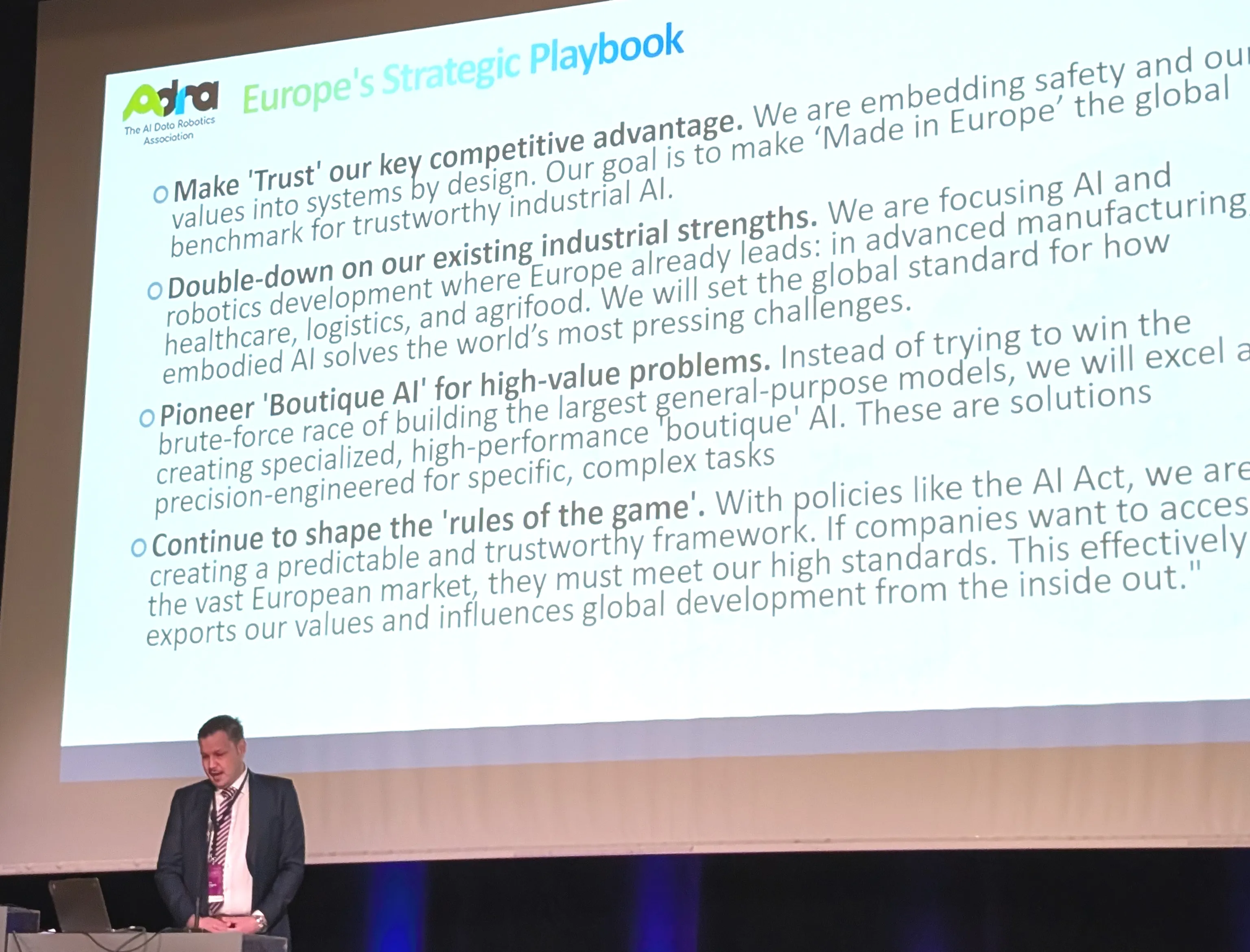
The main stage featured presentations on topics including the LUMI supercomputer infrastructure and Industry 5.0: the shift from pure digitalization toward human-centered innovation in industrial applications. These themes reflect the broader direction of applied AI: powerful compute resources combined with approaches that keep human expertise central to the process.
Research themes from the poster session
The poster session offered a closer look at current doctoral research across Finnish universities. We spent considerable time discussing work with PhD candidates and exploring the range of topics being pursued. Some themes that stood out:
Probabilistic methods and uncertainty quantification dominated the session, with multiple research groups presenting work on Bayesian optimization, simulation-based inference, and methods for reliable predictions under uncertainty. For engineering applications where decisions carry real consequences, these approaches matter.
Applied ML for science and industry included work on mineral processing optimization using surrogate models and Bayesian methods, weather forecasting with neural models trained on LUMI, and plasma stability prediction for fusion research. The VTT poster on flotation process optimization particularly caught our attention. Using LSTM surrogate models with Bayesian optimization for process control is directly relevant to industrial engineering challenges.
3D vision and graphics research showed advances in Gaussian splatting for 3D reconstruction, including compression methods and handling of real-world scene distractors.
Systems and operations research addressed anomaly detection in microservice architectures using multimodal data: logs, metrics, and traces combined for more reliable monitoring.
The breadth of research reflects how AI methods are maturing from experimental techniques into practical tools across diverse domains. For a company applying machine learning to infrastructure engineering, understanding where the research frontier is moving helps us identify which emerging methods might eventually become practical for our work.
AI Summit in Turku
Four days later, on November 17, we attended the AI Summit at Logomo in Turku. Organized by ELLIS Institute Finland, AI Finland, and Peter Sarlin's Foundation PS, the event marked an important milestone for Finnish AI with the official launch of ELLIS Institute Finland.
Where AI Day focused on research, AI Summit brought together industry leaders, investors, and policymakers. The accompanying AI Gala recognized the year's most notable AI implementations across Finnish organizations.
Samuel Kaski, founding director of ELLIS Institute Finland, was recognized as visionary AI leader of the year, and Pekka Abrahamsson received the AI researcher award. On the startup side, Inven won AI startup of the year and Bitmagic took the most innovative AI pilot award. The mix of research recognition and practical applications reflected the event's theme of bridging academia and industry.
The networking was valuable. Conversations ranged from implementation challenges to collaboration opportunities, and these informal discussions often reveal more about where the field is heading than formal presentations.
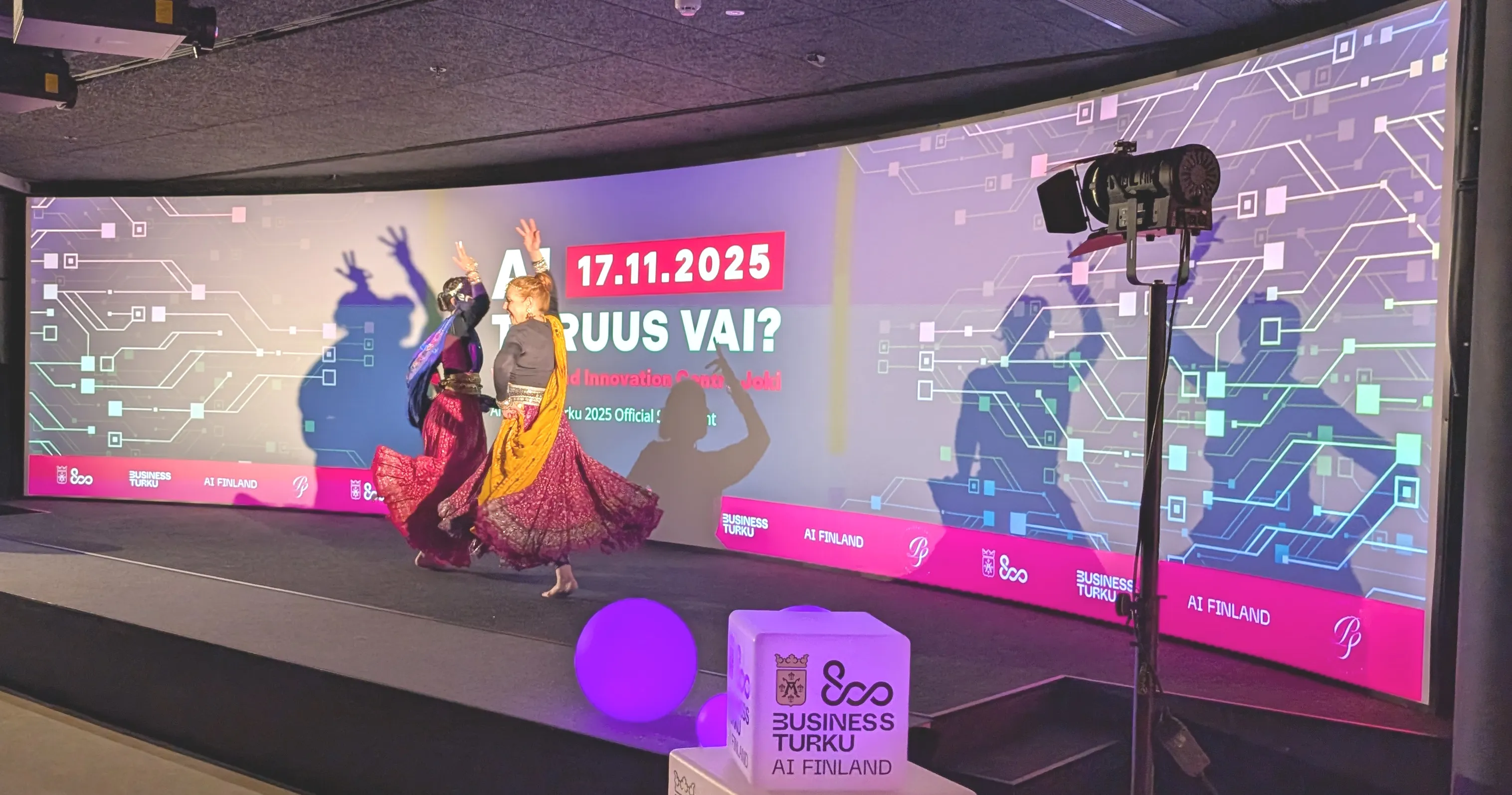
We also attended the "AI Turuus vai" afterparty at the Visitor and Innovation Centre Joki, arranged by the City of Turku and Business Turku.
Looking ahead
The contrast between the two events was useful: AI Day showed where research is heading, while AI Summit showed what's already working in production. For a company applying machine learning to infrastructure engineering, both perspectives matter.
Looking for expert solutions? Discover Crestia's professional services today.